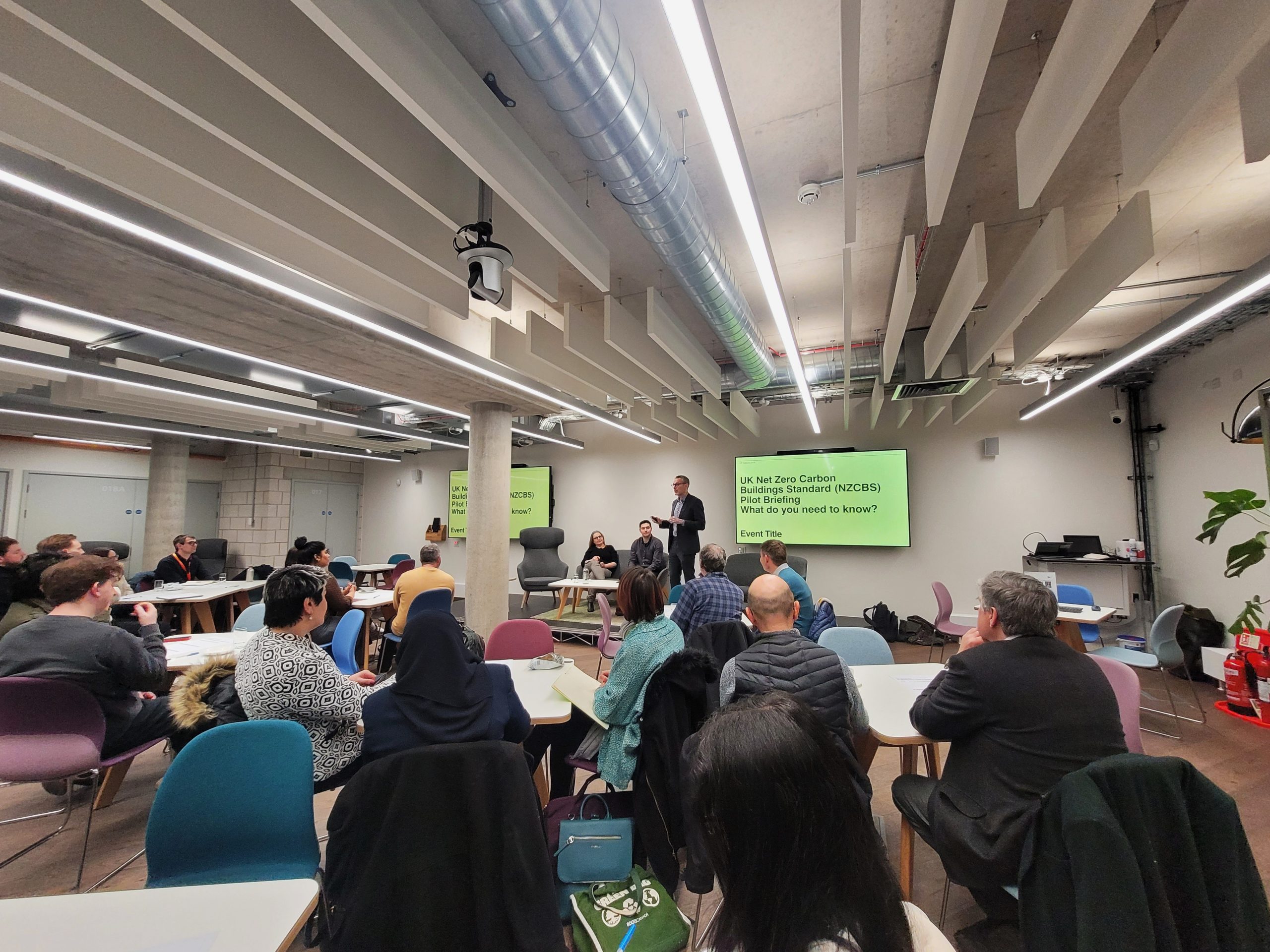
📅 Held on Wednesday 19th Feb 2025— 🕠 17:30-19:30 — 📍 Dryden Enterprise Centre, Dryden Street, Nottingham
We are pleased to invite you to a talk on the UK Net Zero Carbon Buildings Standard (UKNZCBS) – Pilot Version. This event provided an overview of the standard, its key principles, and how it aims to help us achieve our nation’s climate targets.
Date: Wednesday 19th Feb 2025
Time: Doors open at 5.30pm, the event starts at 6pm.
Location: Dryden Enterprise Centre, NG1 4FQ
Minutes:
We are back! 2025 has come with a bang and the EMSP25 is running events again this year.
At this session, we dived into the UK Net Zero Carbon Building Standard. You can read more about it and access the standard here: Home | UK Net Zero Carbon Buildings Standard
We had welcome drinks, starting the session at 6pm.
Richard gave a great introduction, welcoming us back to 2025. He introduced our purpose and objectives, of which you can read on our website here: About
Following this, Will dived into the standard. Broadly we covered:
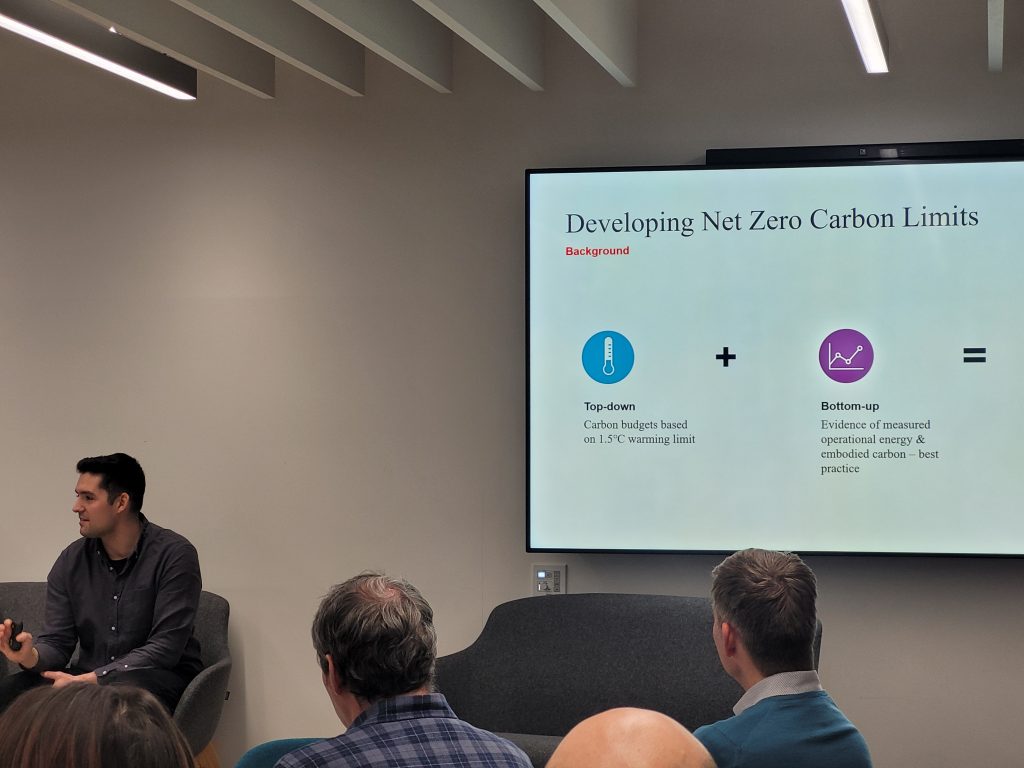
The UK Net Zero Carbon Buildings Standard (NZCBS) – the Pilot version is out! It has quite a lot of pages… Version 1 to be released late 2026. It is important – a standard that offers science based reduction limits – which is critical to a just and net zero. The standard is formed of:
- Top-down carbon budgets based on 1.5°C warming limit.
- Bottom-up performance levels established via benchmarking and case studies.
The Standard covers:
- The key limits, targets and reporting requirements. Noting the importance of Whole Life Carbon reporting.
- Projects have limits, such as no fossil fuels in operation
- The active reduction of operational energy use intensity (EUI) and embodied carbon – two great additions and data is available in the standard.
What is going to change now that we have the standard?
The Standard is going to need a collaborative environment to thrive. All project stakeholders – clients, designers, cost consultants, contractors – are all going to need to work together to achieve this.
In Arup, we call this “Total Design“.

We talked about some of the key changes that will come to our design process:
- More time needed at early design stages, with the whole project team – to bring greater understanding and detail to the considered design. This strongly aligns with other requirements on the industry, like the Building Safety Act.
- For considering embodied carbon, projects will need Life Cycle Assessments (upfront + whole life) look to engage supply chains through early contract involvement / supply chain engagement. Lastly, there will need to be trace and accountability on site (EPDs etc).
- When considering operational energy, energy modelling will be required ! Think about dynamic simulation modelling – when are you doing it? When is stakeholder engagement happening – the building users need to know and be bought into the operational strategies of the building.
- Carbon value engineering… is it time to bring a carbon coordinator role into the project, similar to a QS?
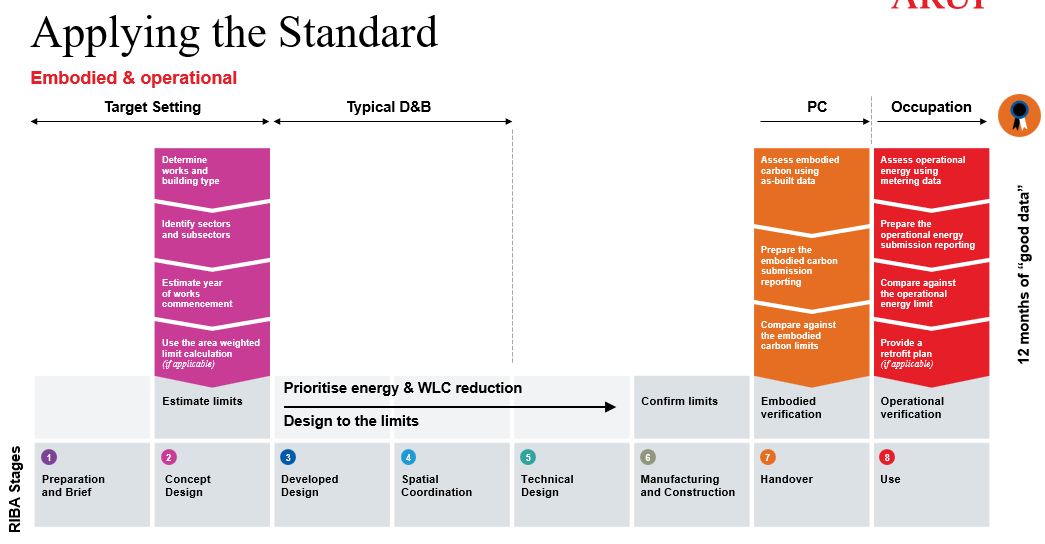
What is Arup’s Involvement?
Arup have been involved in the development of the standard, including governance, task groups, and sector groups.
You can find the event slides below.
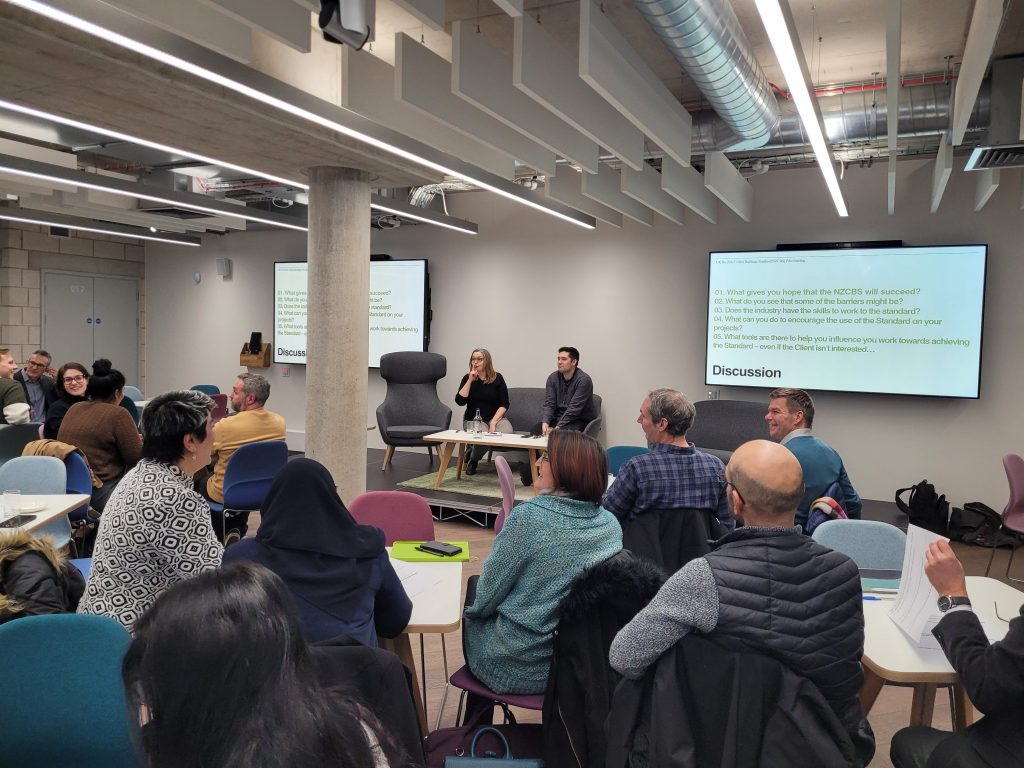
Discussion
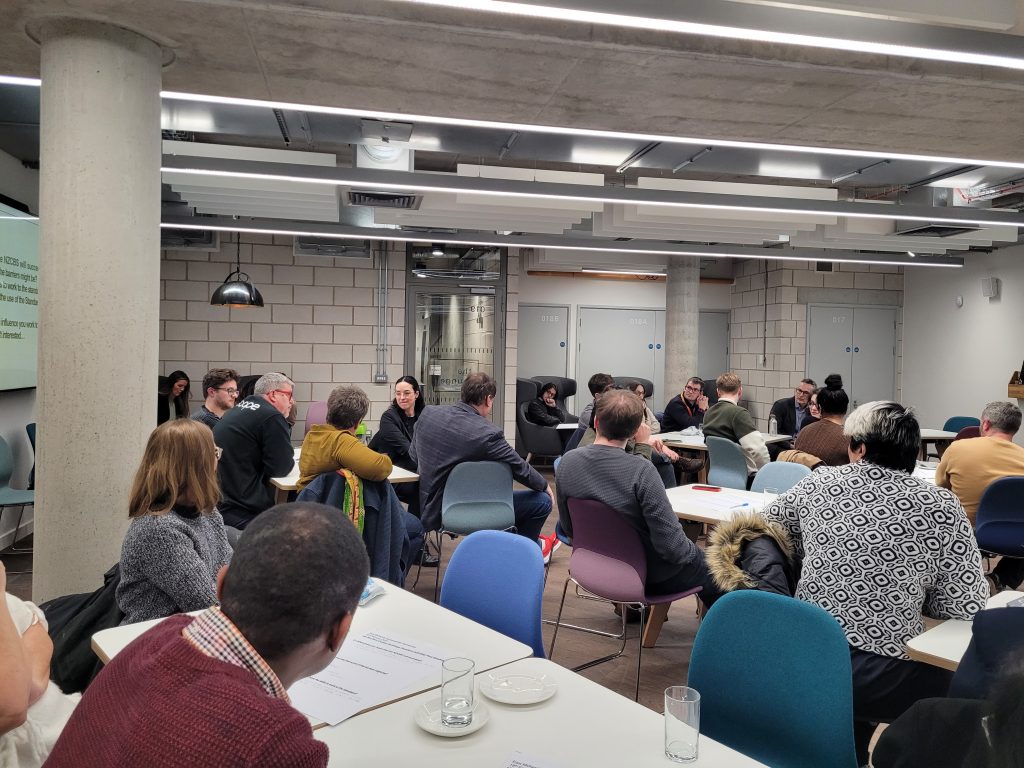
We had a great discussion. The discussion continues as always on our Linkedin Group.
Below are the questions we discussed on the night. You can see some of the written responses below.
01. What gives you hope that the NZCBS will succeed?
02. What do you see that some of the barriers might be?
03. Does the industry have the skills to work to the standard?
04. What can you do to encourage the use of the Standard on your projects?
05. What tools are there to help you influence you work towards achieving the Standard – even if the Client isn’t interested…
Next Event
Our next event is 16th April.
Join us at the Dryden Enterprise Centre in Nottingham, for an interactive session that will explore the role of artificial intelligence in life cycle assessment tools.
This will be a joint session led by Morgan Sindall and NTU’s School of Architecture Design and Built Environment and will present findings from a recent Innovate UK project that utilised AI in Morgan Sindall’s Carbonica LCA tool.
The session will also explore the wider role of AI in the built environment.
It’s a breakfast event and you can sign up here:
AI and Life Cycle Assessments… Tickets, Wed 16 Apr 2025 at 08:00 | Eventbrite
Leave a Reply