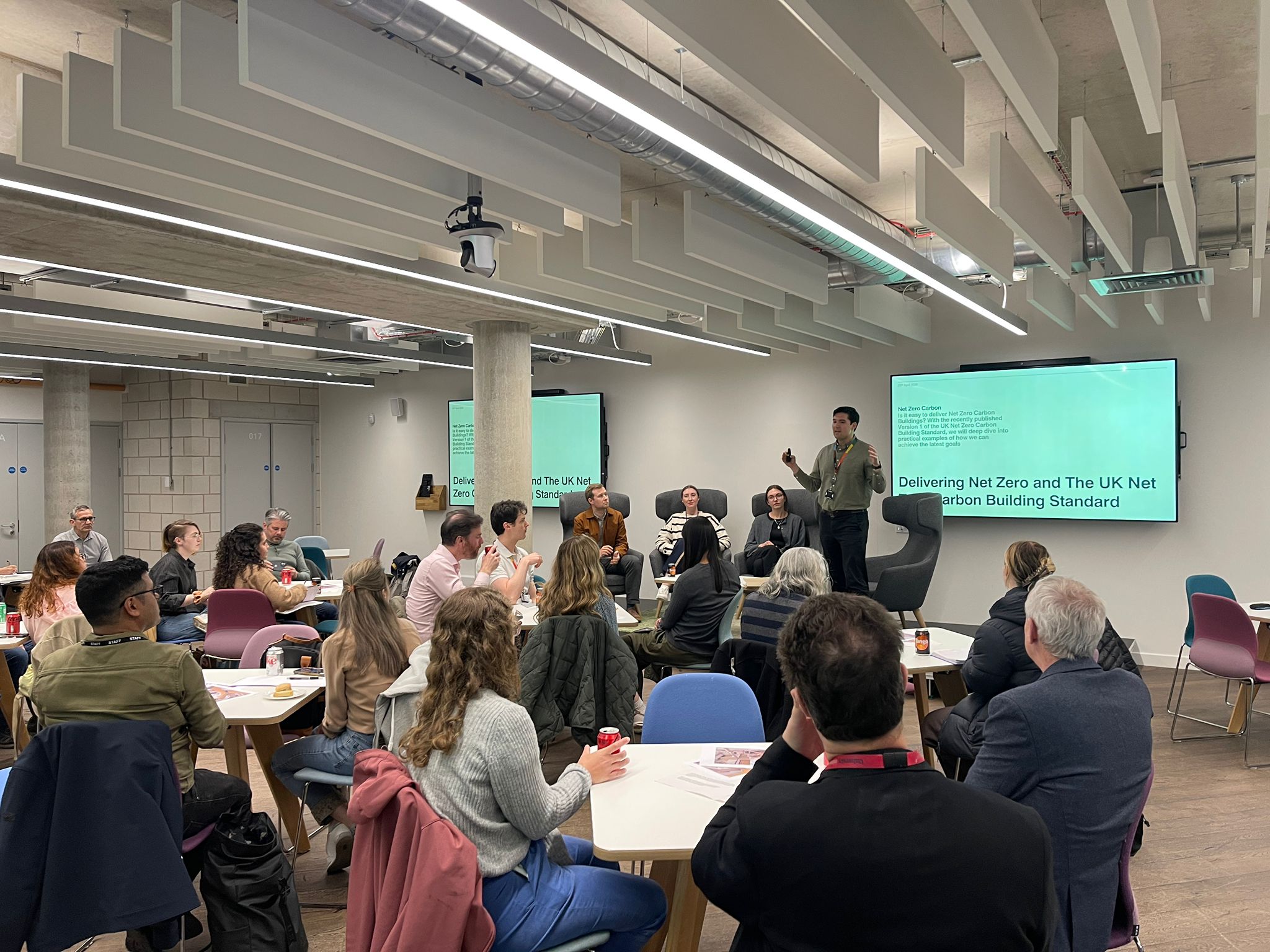
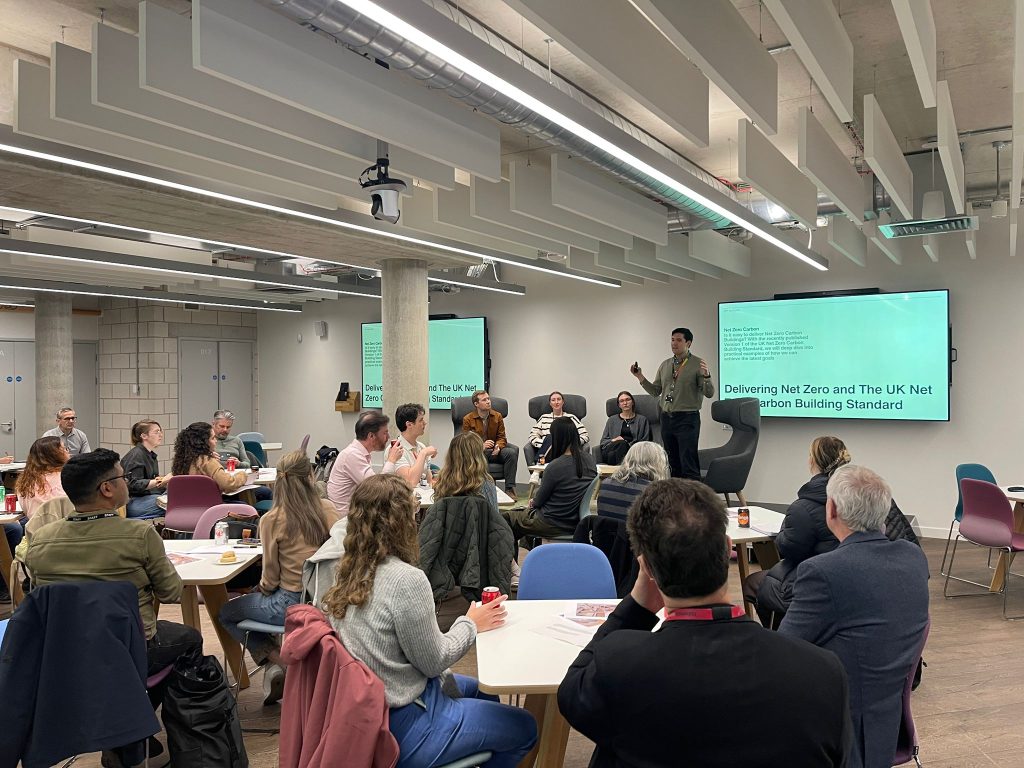
📅 Held on Thursday 23rd April 2026— 🕠 17:30-19:30— 📍Dryden Enterprise Centre NTU
What recent projects and the UK Net Zero Carbon Buildings Standard mean for real‑world delivery.
Across the UK, ambitions for net zero carbon buildings are accelerating. Yet turning those ambitions into delivered, operational buildings remains one of the biggest challenges facing the built environment.
At another packed East Midlands sustainability event, practitioners from consultancy, academia and industry came together to explore what net zero carbon really means in practice — from embodied carbon and operational energy, to the implications of the UK Net Zero Carbon Buildings Standard.
The message was clear: net zero is no longer a vague aspiration. It is measurable, verifiable, and increasingly expected.
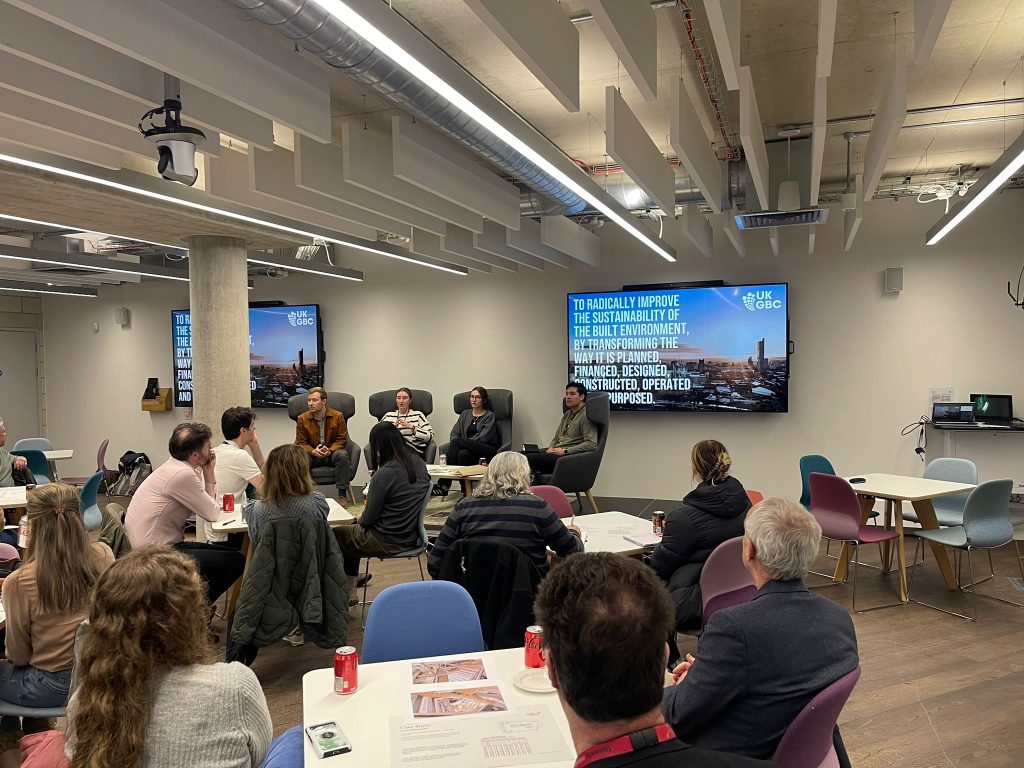
Why this conversation matters.
Many organisations now have climate commitments — often targeting net zero by 2030 or 2050. Buildings completed today will still be operating well within those timeframes, meaning decisions made at briefing and early design stages carry long‑term carbon consequences.
Events like this provide space to step back from individual projects and focus on shared learning: what is working, where the barriers remain, and how industry can move faster together — particularly outside the major metropolitan centres.
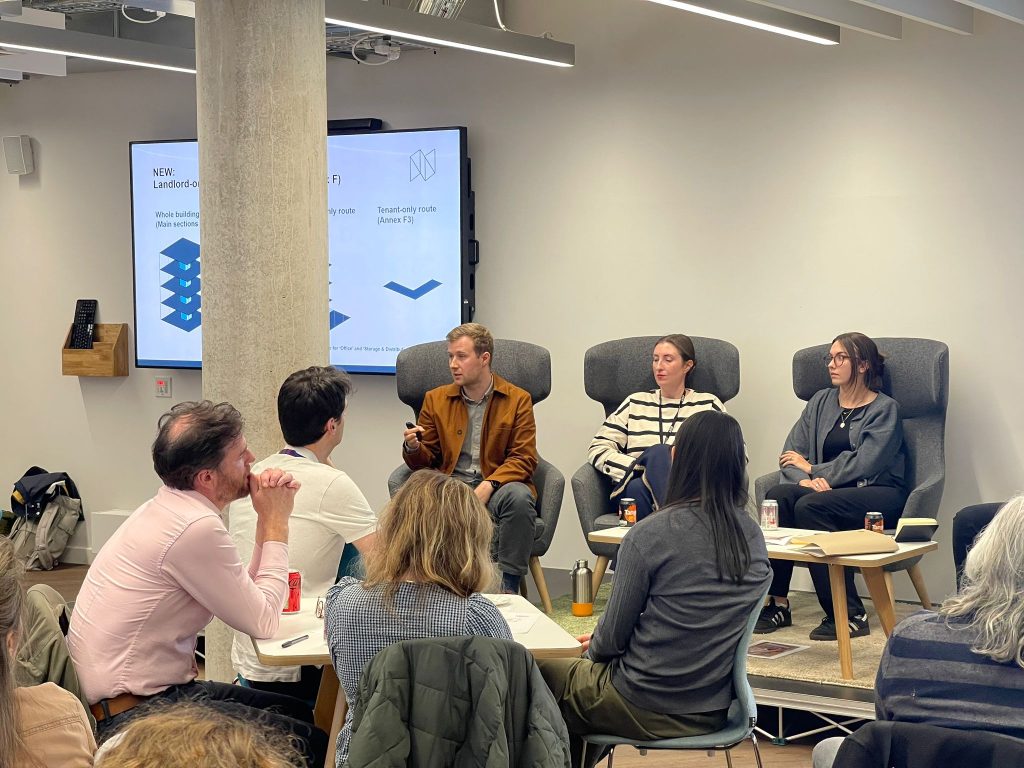
Our speakers had a broad range of experience:
Jaime Oliver – Principal Sustainability Consultant at CPW.
Ali Brit – Principal Sustainability Consultant at Arup
Orlando Gibbons – UKGBC Secondee, representing the Technical Steering Group on the UK Net Zero Carbon Building Standard.
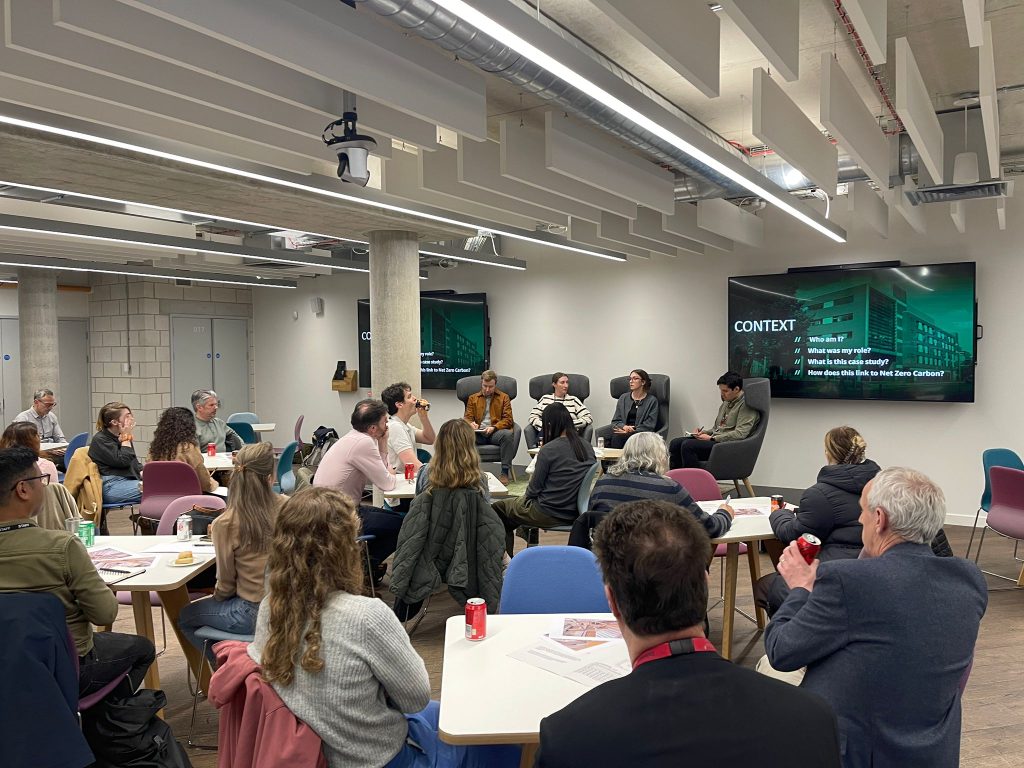
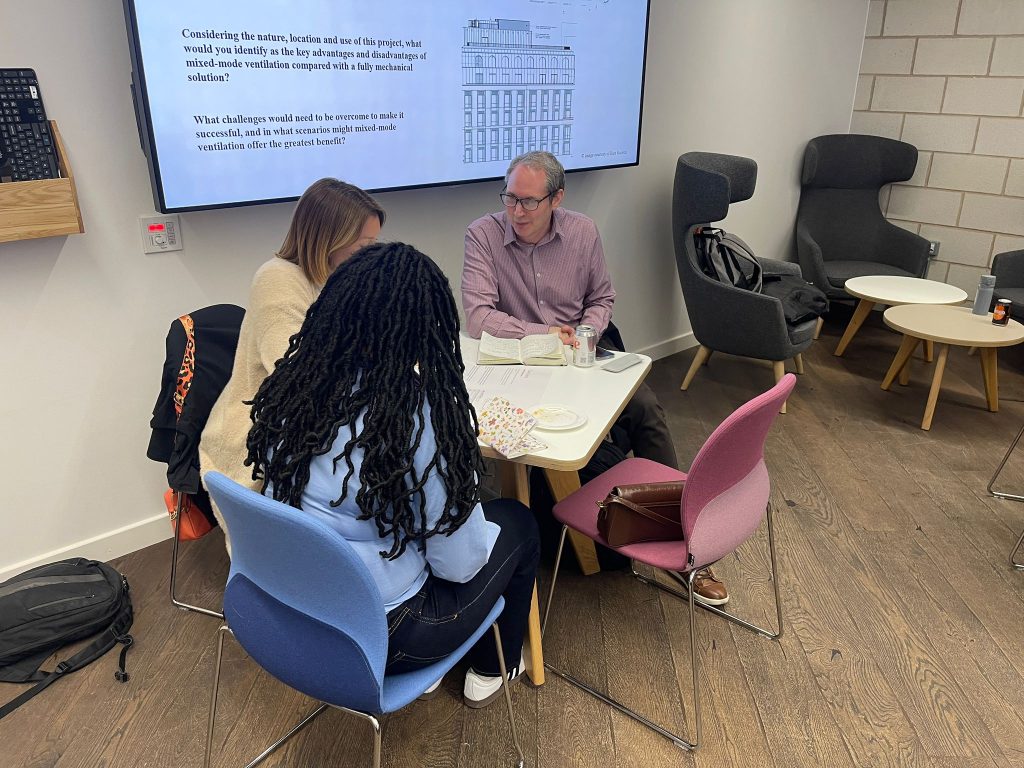
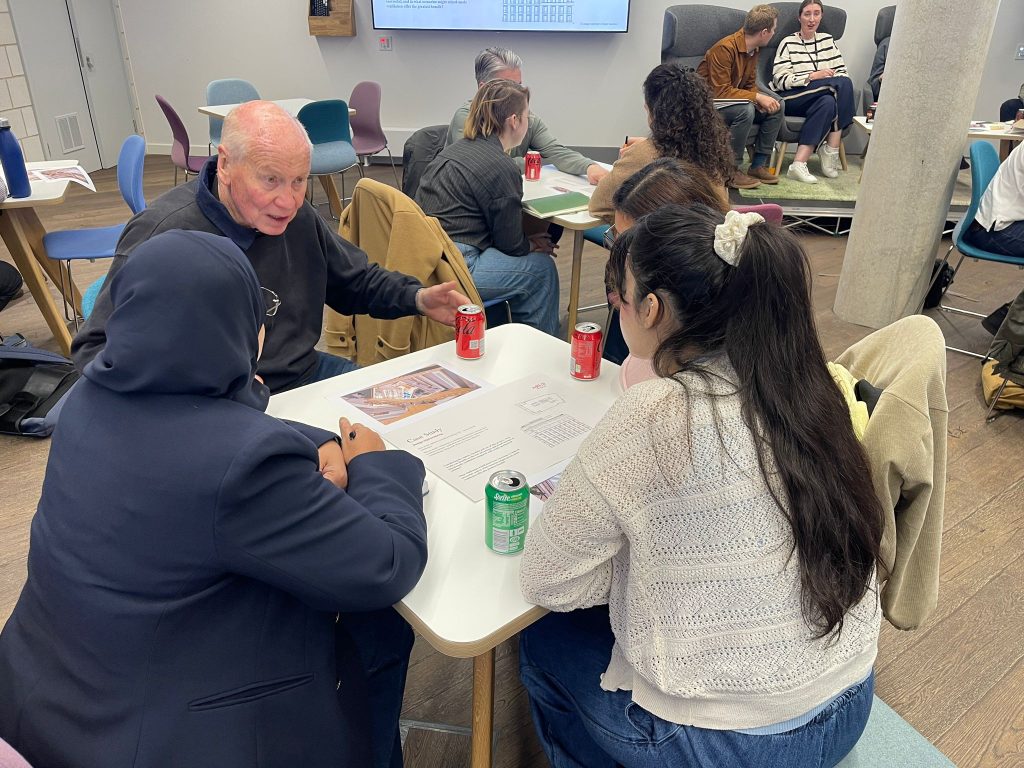
Speaker 1 – Jaime Oliver: Net zero carbon in construction at the University of Derby
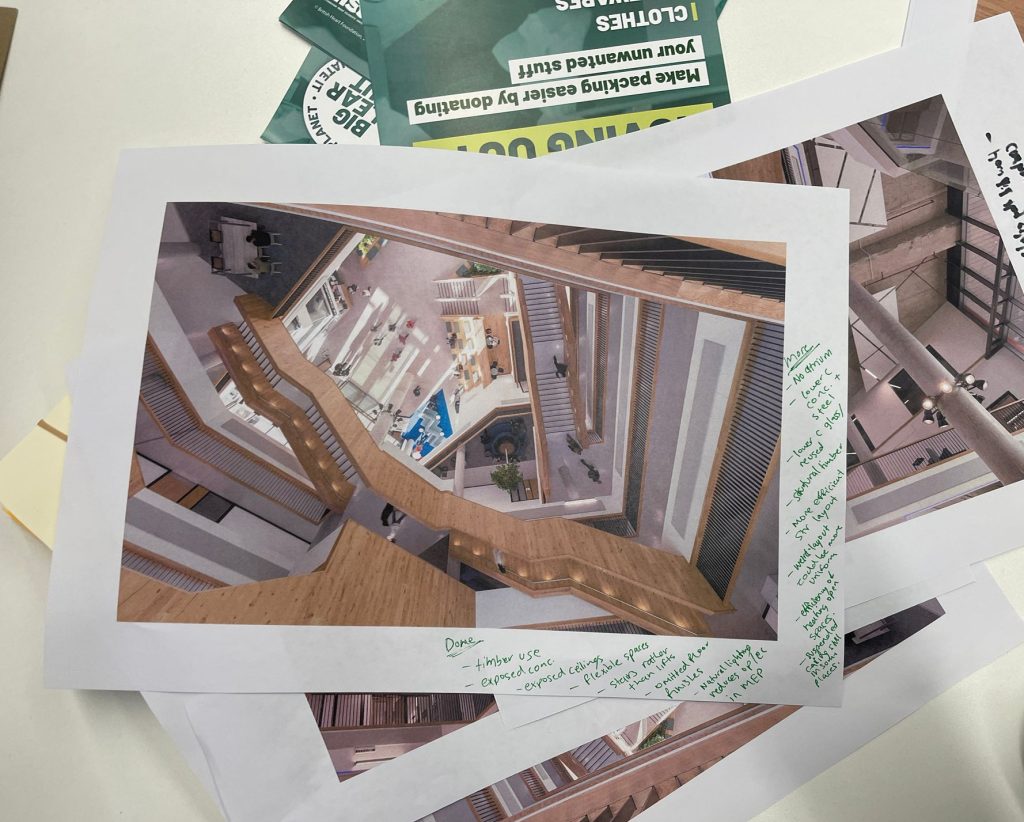
A central example was the University of Derby Business School — a £75m, seven‑storey building that set out to achieve net zero carbon in construction, aligned with the UK Green Building Council framework.
From feasibility onwards, the project team carried out whole life carbon assessments at every RIBA stage, focusing effort where it mattered most rather than trying to optimise everything at once.
As expected, concrete dominated embodied carbon impacts. Early engagement enabled increased use of GGBS in some elements, while pragmatic decisions were made where programme or supply‑chain constraints limited options. Timber was used strategically for prominent architectural features, and unnecessary finishes were reduced across the building.
A major structural rationalisation exercise between RIBA Stage 3 and Stage 4 led to an overall reduction in concrete and steel quantities — highlighting the value of early, iterative carbon feedback in influencing design decisions.
After reductions were maximised, around 6,650 tonnes CO₂e of residual embodied carbon were offset. In parallel, a transition fund supported peatland restoration in Derbyshire, linking carbon action directly to local environmental benefit.
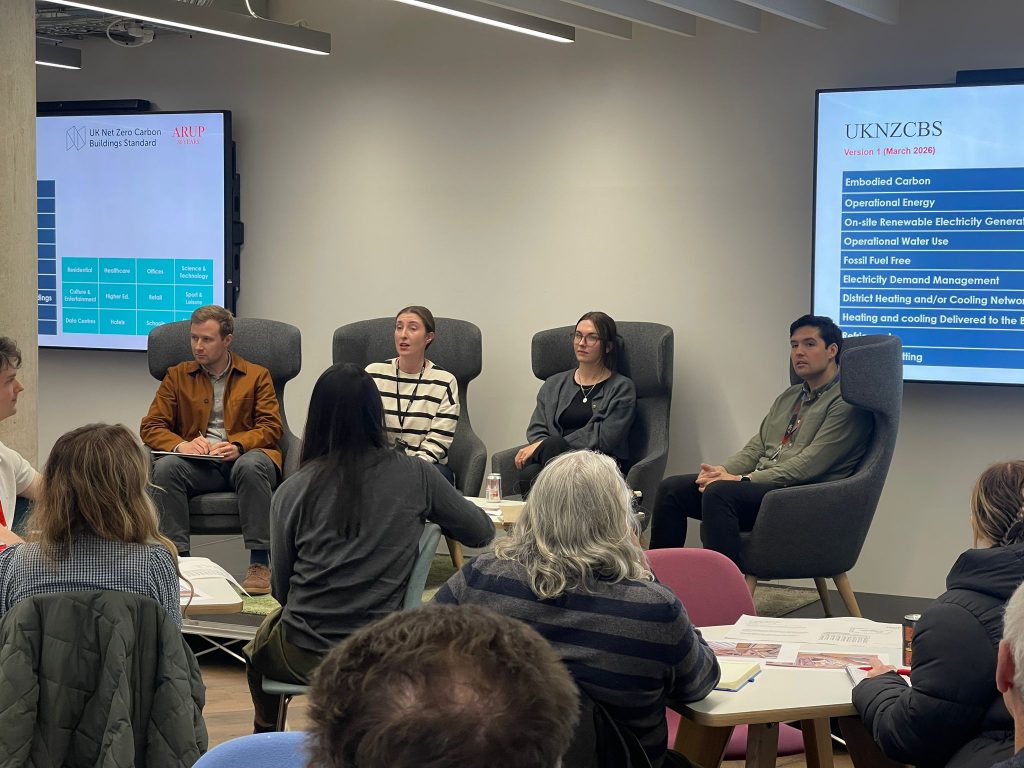
Speaker 2 – Ali Brit: Operational energy: design is only part of the story
The discussion then turned to operational performance — and the often‑significant gap between design intent and reality.
A defining feature of the UK Net Zero Carbon Buildings Standard is its reliance on measured, in‑use energy, rather than design modelling alone. Buildings must demonstrate compliance using at least 12 months of real operational data once minimum occupancy is achieved.
This aligns closely with NABERS UK, now recognised as a compliance route within the Standard.
A London office retrofit case study showed that strong outcomes are possible even within significant constraints such as heritage facades and tight floor‑to‑ceiling heights. Through decentralised plant, careful control strategies, use of thermal mass and robust dynamic simulation, the building is predicted to achieve 5‑star NABERS performance.
However, a comparison of two near‑identical office buildings in Birmingham revealed a critical lesson. Despite the same design and services, one building operated at around 130 kWh/m²/year, while the other was closer to 200 kWh/m²/year. The difference was not design — it was handover, facilities management capability and operational oversight.
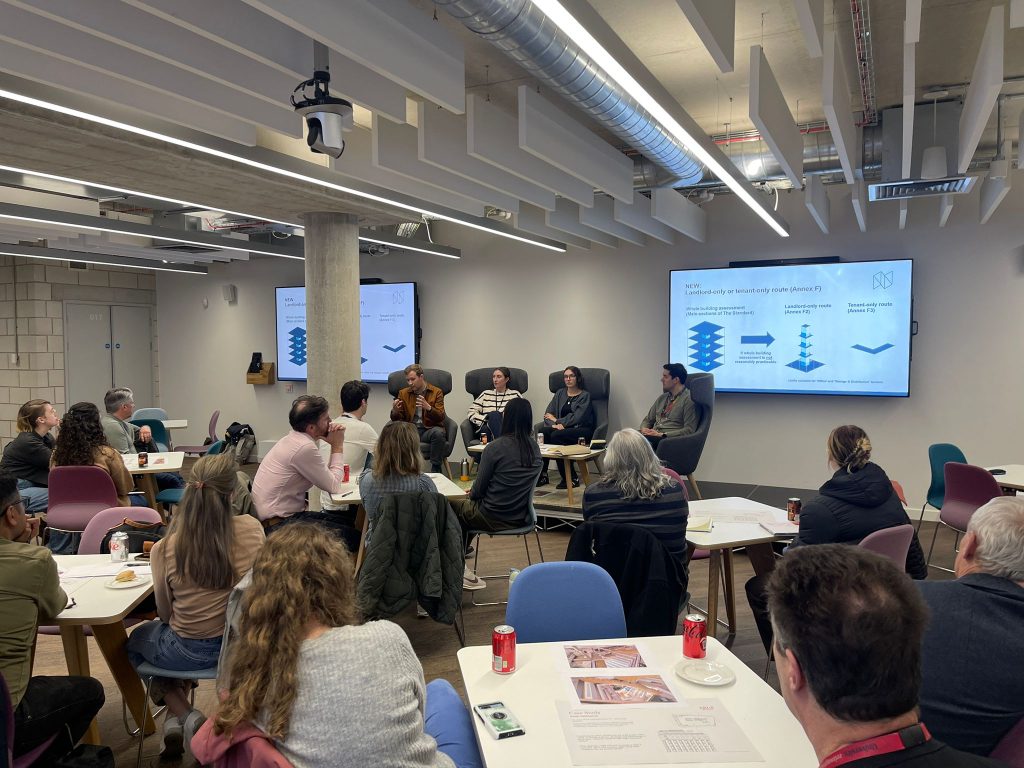
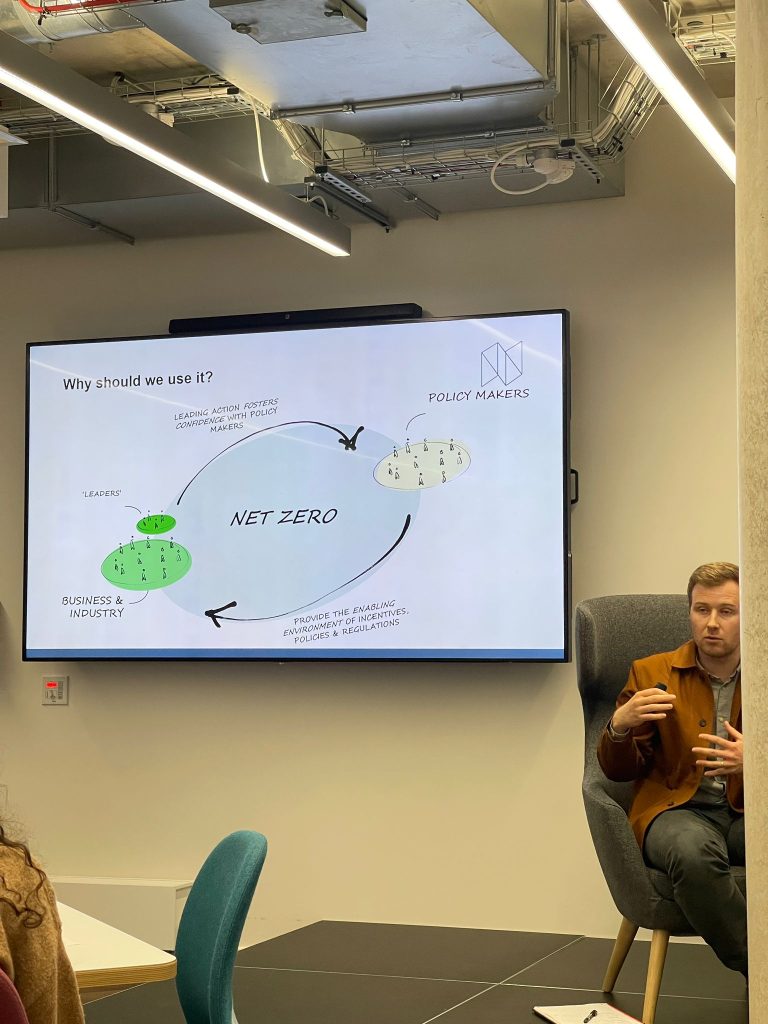
Speaker 3 – Orlando Gibbons What the UK Net Zero Carbon Buildings Standard changes
Launched in March 2026, the UK Net Zero Carbon Buildings Standard provides a clear, industry‑led definition of what “net zero carbon” actually means.
To be Net Zero Carbon Aligned, a building must meet strict pass‑fail criteria covering upfront embodied carbon limits, operational energy limits, fossil‑fuel‑free operation, refrigerant impacts, on‑site renewables where applicable, and transparent carbon reporting.
Offsetting is optional, but where used must meet defined quality standards.
A key update from the pilot phase is the introduction of a “Practical Completion – On Track” route. This allows projects to demonstrate credible alignment earlier, rather than waiting a full year for operational data — addressing a major concern for developers and funders.
A real opportunity for regional projects
While early momentum has been strongest in London, the discussion highlighted real opportunity for regional projects to lead — particularly where sites are less constrained, buildings are refurbishment‑led or low‑rise, clients have strong ESG commitments, and early decisions can still be influenced.
Even where full compliance may not yet be achievable, the Standard provides a powerful benchmark for raising ambition and reshaping conversations with clients and supply chains.
Event Summary: The direction of travel
The strongest takeaway was cultural rather than technical.
Net zero can no longer be treated as a bolt‑on aspiration. It demands early commitment, supply‑chain engagement, robust data, and serious attention to how buildings are handed over and operated.
Progress will not come from waiting for perfect policy alignment, but from projects taking incremental, credible steps — testing new materials, challenging assumptions, and raising expectations.
In the East Midlands and beyond, that journey is clearly underway.
Join us for our next event, May 21st. See the LinkedIn Group for sign up information.
Leave a Reply